Do Storm Doors Really Keep the Cold Out? What Canadian Homeowners Need to Know
With November here, Canadian homeowners are asking a very practical question
The furnace is running again, the drafts are back, and somewhere near your front door there's a familiar chill that no amount of weatherstripping seems to fully eliminate. If you've been wondering whether a storm door would actually help — or whether it's worth the investment this late in the season — this article is for you.
Let's look at what storm doors genuinely do, what they don't do, and what matters most when choosing one for a Canadian home.
What Does a Storm Door Actually Do?
A storm door is a secondary exterior door installed in front of your main entry door. It serves several practical functions:
- Creates a buffer zone. The air space between your storm door and your main entry door acts as a small insulating pocket. Cold air from outside meets the storm door first — and the entry door stays in a more protected, less exposed environment.
- Reduces drafts. Many of the drafts homeowners feel near their front door come from gaps around or under the main door. A properly fitted storm door with good weatherstripping adds a second seal, reducing the cold air infiltration that gets through.
- Protects your entry door. Canadian winters are hard on exterior finishes. A storm door shields your main door from rain, freezing rain, snow, UV, and wind — extending its life and maintaining its appearance.
- Offers ventilation in warmer months. Most quality storm doors include a retractable screen, so you can enjoy fresh air and insect protection during spring and summer without switching doors.
It's worth being straightforward here: a storm door is not a substitute for proper insulation or a well-sealed main entry door. But for homes where the main door is in decent condition, adding a storm door is one of the more practical front-door upgrades a homeowner can make before winter.
Are Storm Doors Worth It in a Canadian Climate?
Yes — and arguably more so than in milder climates. Here's why Canadian conditions make storm doors a practical addition:
Freeze-Thaw Cycles
Cities like Ottawa, Toronto, and much of southern Canada experience repeated freeze-thaw cycles from late autumn through spring. These cycles stress door frames, gaps expand and contract, and weatherstripping degrades faster than it does in milder regions. A storm door provides an outer layer of protection that absorbs some of that seasonal stress before it reaches your primary door.
Wind and Wind Chill
Wind chill makes cold feel significantly harsher than the actual temperature suggests — and it also forces cold air into gaps around doors much more aggressively. A storm door breaks that wind pressure at the outer layer, which reduces the speed and volume of cold air trying to work its way through your entry door.
Extended Ventilation Season
Ontario's spring and fall bring those ideal days when you want fresh air but don't want bugs in the house. Storm doors with retractable screens make it easy to ventilate without a screen door that needs to be swapped in and out seasonally.
Entry Door Longevity
If your main entry door is wood, fibreglass, or a painted steel door with good curb appeal, protecting it from direct winter exposure is a legitimate long-term investment. Refinishing or replacing a decorative front door is expensive. A storm door pays for itself partly by extending the life of what's behind it.
Mid-View vs. Full-View Storm Doors: Which Is Better for Winter?
This is one of the most common questions homeowners ask when shopping for a storm door, and the honest answer is that both perform well in winter conditions. The difference is primarily visual and practical, not thermal.
Mid-View Storm Doors
A mid-view design has a glass panel that covers the upper portion of the door, with a metal lower section below. The lower panel provides a more solid feel at the base of the door and gives the entrance a less open, slightly more private appearance. If you want a balance between glass area, curb appeal, and a sense of solidity at the entry, mid-view is a strong all-around choice.
Full-View Storm Doors
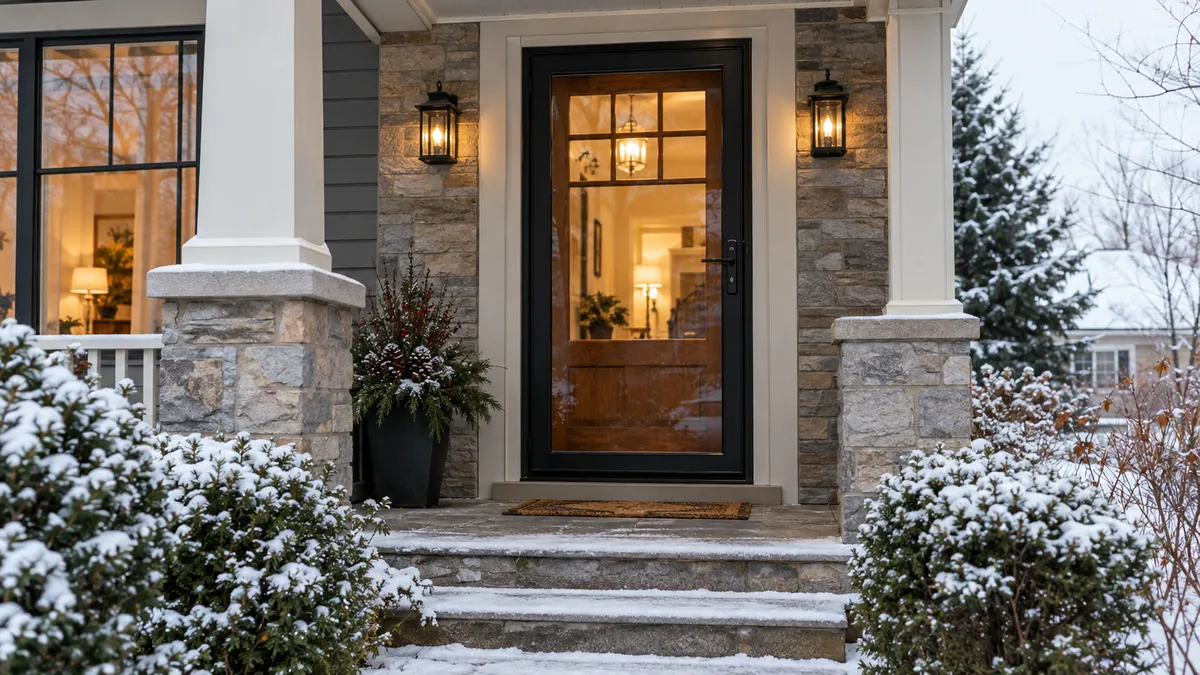
A full-view design replaces the lower metal section with glass, giving you the largest possible glass area. This lets in more natural light, makes the entrance feel more open, and tends to suit homes with attractive front doors where the homeowner wants both the storm door and the main door to be visible. Full-view doors are especially popular with black aluminum frames, which complement dark or bold front door colours.
From a winter performance standpoint, both designs use tempered glass and quality weatherstripping. Your choice should be based on how you want the entrance to look and feel — not on one being more cold-weather capable than the other.
What About Colour? Black vs. White Storm Doors in Canadian Weather
Both black and white aluminum storm doors perform well year-round in Canadian conditions. Aluminum frames are durable, resist corrosion, and hold up through seasonal temperature swings far better than older wood or steel frames.
Colour is primarily an aesthetic decision tied to your home's exterior palette:
- White storm doors suit traditional homes, light-coloured siding, and classic entry door colours like red, green, or natural wood tones.
- Black storm doors have become increasingly popular with modern and transitional home styles, and pair especially well with charcoal, navy, dark green, or natural wood entry doors. Black aluminum frames give the entrance a clean, finished look that photographs beautifully for curb appeal.
If you're on the fence, think about what your neighbours' homes look like and what colour your main door and siding are. A professional can also advise during the measurement visit.
Can You Still Get a Storm Door Installed Before Winter?
Yes — and November is still a reasonable time to move forward. Storm door installation is generally a one-day project that doesn't require major construction. A professional team can measure your entrance, confirm the right size, and complete installation without significant disruption.
The main consideration at this time of year is scheduling: if you want your storm door in place before the harshest cold arrives, it's worth starting the process sooner rather than waiting until January. Getting a professional measurement booked now means you'll know exactly what you're working with and can plan your installation accordingly.
What Mr. Storm Door Offers
Mr. Storm Door supplies and professionally installs quality storm doors across Ottawa and the Greater Toronto Area. Every package is straightforward: one fixed price that includes the door, delivery, handle and hardware, professional measurement, and professional installation. If you have an existing storm door, removal and disposal are included.
The current lineup includes three options, each with a retractable screen for year-round flexibility:
- Simple White — The LARSON Bismarck, a mid-view tempered glass storm door in white. Available in multiple sizes. A clean, solid choice for homeowners who want reliable quality at a straightforward price.
- Premium White or Black — The Larson Tradewinds Mid-View, available in white or black aluminum. A larger glass area with a metal lower section — a well-rounded option that works for most entrances and most homeowners.
- Luxury Full View Black — The Larson Tradewinds Full-View in black aluminum. The largest glass area in the lineup, ideal for homeowners who want a dramatic, open entrance with a modern appearance.
You don't need to measure your door yourself. Professional measurement is included and confirms both the right size and whether your entrance is within the supported installation scope. If you'd rather not purchase first, you can book a free measurement to confirm suitability before committing.
The Bottom Line
A storm door won't fix a poorly insulated home — but it is a practical, durable upgrade that creates a meaningful buffer between the Canadian winter and your front entry. It reduces drafts, protects your main door, adds natural light, and gives you ventilation options through every season. If you've been thinking about it, the weeks before the deep freeze arrives are the right time to act.
